
SMS/MMS messaging is a powerful tool for reaching your customers in real-time, whether you're deploying time-sensitive order updates, extending exclusive offers, or offering conversational support. However, sending the message is just the first step. If your messages don’t get delivered, even the best offers or urgent alerts won’t have an impact.
Some factors affecting deliverability are outside our control, but there are proactive steps you can take to maximize your SMS/MMS campaign success. This guide will walk you through proven strategies to optimize messaging, troubleshoot common delivery issues, and leverage powerful tools like Vail's Messaging API to boost message success and enhance customer engagement.
What is SMS deliverability and why is it important?
SMS deliverability refers to the percentage of messages that successfully reach recipients’ mobile devices. Monitoring your delivery rate is key for diagnosing performance issues, whether they’re technical like latency or related to your campaign strategy, such as audience targeting or message content.
A low delivery rate often signals problems with your contact list, carrier, or message formatting. On the other hand, if delivery rate is high but engagement is low, the issue could lie in timing, message clarity, or the strength of your call to action.
For security-sensitive use cases like two-factor authentication (2FA), tracking successful logins and resend requests provides deeper insight into deliverability. And when using two-way messaging, monitoring reply rates can reveal valuable information about customer engagement.
Why your SMS messages aren’t getting delivered (and how to fix it)
Below are some of the most common causes of undelivered SMS messages and practical solutions to resolve them.
1. You have not registered your SMS/MMS traffic
In the U.S., carriers require all Application-to-Person (A2P) or business-to-consumer messaging traffic to be registered. Failure to register results in your messages not being sent or blocked as spam. If you are sending SMS/MMS messagings via a 10-digit long code (10DLC) phone number, that traffic must be registered withThe Campaign Registry.
How to address this:
Leverage Vail's concierge service to navigate 10DLC, toll-free, and short code registration processes, helping you to deploy your campaigns faster.
2. Messaging volume exceeds your number type limit
Each number type – long codes (10DLC), toll-free numbers, short codes – has specific messaging throughput limits. When you exceed your number type rate limit, your messages may get flagged as spam by carrier filters.
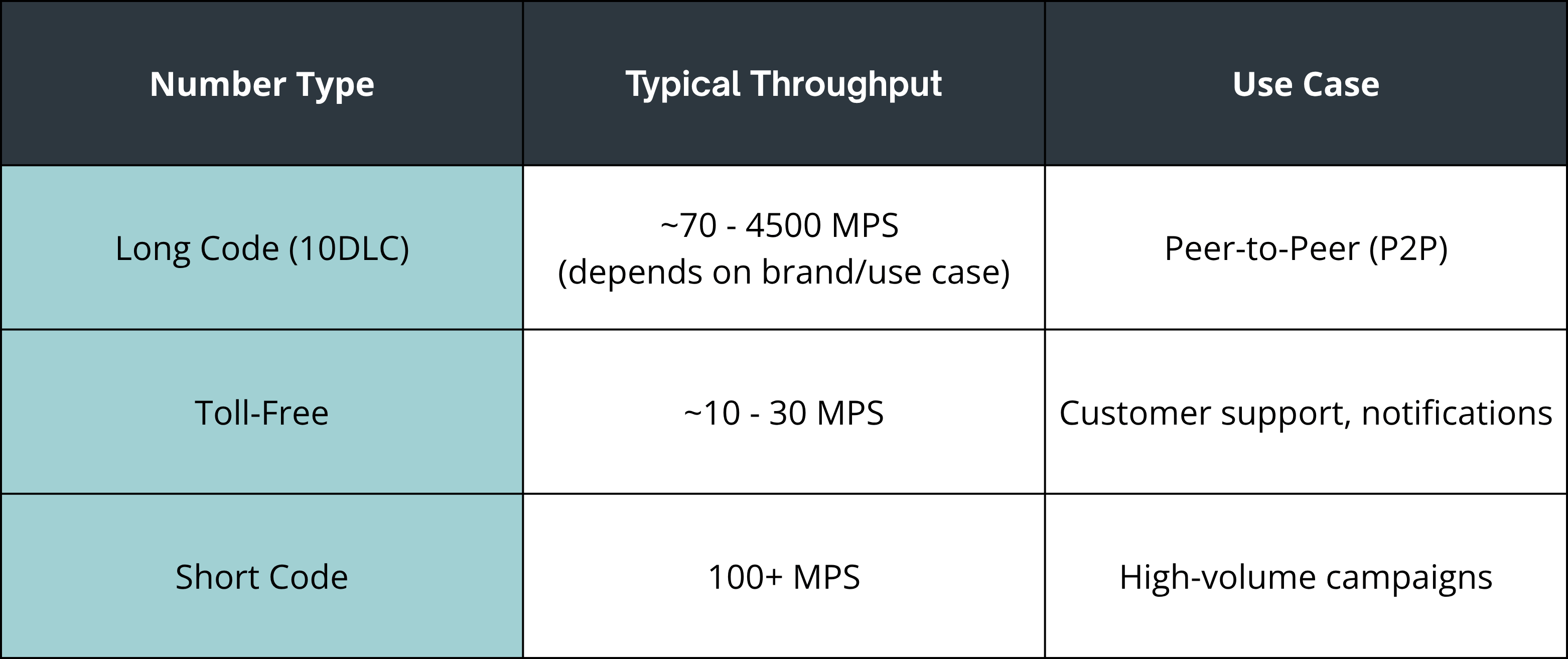
Learn moreabout each number type, their use cases, and associated registration fees.
3. Spam filters blocked your message
Carriers use spam filters to protect users from unwanted or fraudulent messages. If your SMS content includes suspicious keywords, repeated phrases, or follows aggressive sending patterns, it may be flagged and blocked.
How to address this:
- Always include a clear opt-out option
- Send personalized, relevant content instead of bulk or generic promotions
- Make sure your campaigns comply with TCPA guidelines
4. Invalid phone number or device issues
SMS delivery failures can occur if the recipient’s phone number is incorrectly formatted, unassigned, disconnected, or no longer in service. Even with a valid number, technical issues on the recipient’s device — such as low storage, software glitches, or carrier restrictions — can block message delivery. Some users may also have device settings that intentionally block SMS, adding another layer of complexity.
How to address this:
- Regularly clean and validate your contact lists to remove invalid or outdated numbers
- Purchase validated phone numbers using Vail's API
- For sensitive transactions, consider multi-factor validation to verify user identity across multiple channels
5. Carrier service disruptions
Occasionally, SMS delivery fails due to carrier service disruptions, such as network maintenance, technical glitches, or outages. These disruptions can block message delivery even when your system is working properly.
How to address this:
- Monitor carrier service status for updates on outages
- Retry sending messages once the issue is resolved
- Use a messaging platform with high availability and built-in fault tolerance to minimize the impact of carrier disruptions
Monitoring SMS deliverability made easy with Vail's API
With so many factors affecting deliverability, you need full visibility and control over your messages. Built on an enterprise-grade, fault-tolerant platform, Vail's API ensures your messages make it through with low latency, even during outages. With detailed logging and debugging tools, you’ll always know when messages are delivered or need attention. Plus, you can easily automate responses to opt-ins, opt-outs, and “help” keywords to keep your lists updated and compliant with carrier regulations.
Ready to boost your deliverability? Get started with a free trial, claim a number, and start sending test messages with complimentary credits today.
Frequently asked questions
It's the percentage of messages that successfully reach a recipient's device. Monitoring deliverability helps pinpoint whether problems stem from technical issues, contact list quality, or campaign strategy, and separates delivery problems from engagement problems like weak timing or messaging.
Several common issues can cause this: unregistered A2P traffic, exceeding the throughput limit for your number type, spam filters flagging your content, invalid or disconnected recipient numbers, or a carrier outage. Each has a different fix, so identifying which one applies is the first step.
Yes, U.S. carriers require registration for business-to-consumer messaging traffic. If you're sending from a 10-digit long code number, that traffic must be registered with The Campaign Registry, otherwise your messages can be blocked or flagged as spam.
Include a clear opt-out option in every message, send relevant and personalized content instead of generic bulk promotions, and make sure your campaigns follow TCPA guidelines. Suspicious keywords, repeated phrasing, or aggressive sending patterns are common triggers.
Regularly clean and validate your contact list to remove disconnected or incorrectly formatted numbers. For sensitive transactions, consider verifying identity across multiple channels rather than relying on SMS alone.
Carrier-side disruptions like maintenance or technical glitches can block delivery even when your system is functioning correctly. Monitoring carrier status, retrying failed sends once service resumes, and using a messaging platform with built-in fault tolerance can reduce the impact.
Ready to take the next step?
Fill out the form to start a conversation. Can’t wait to connect? Give us a call: (833) 816-2562